
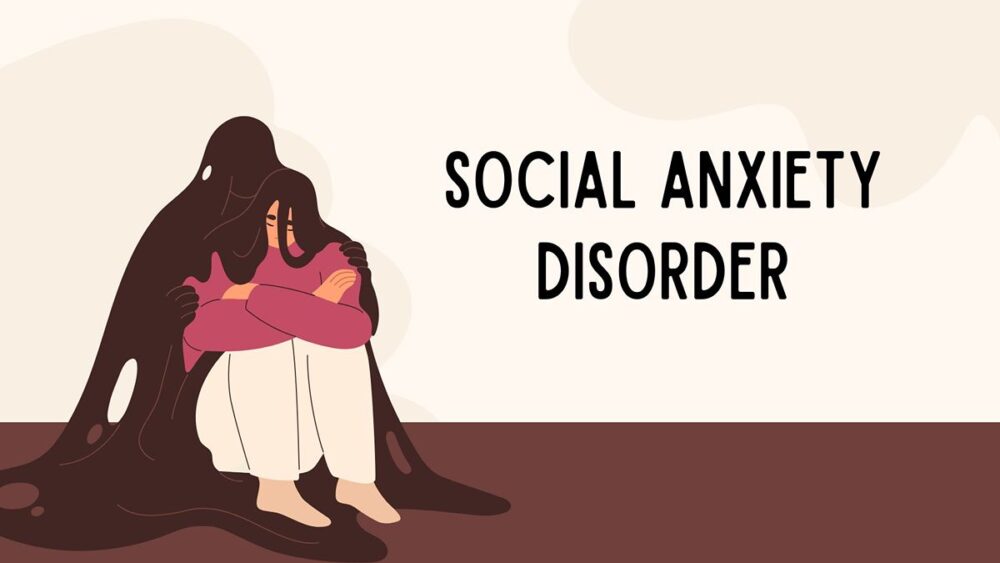
Social Anxiety Disorder
Table of Contents
Clinical Picture
Social Anxiety Disorder (previously known as social phobia) is an anxiety disorder which is characterized by intense fear or anxiety of social situations in which the individual may be examined by others (DSM- 5). Individuals find discomfort in social interaction, and often fear being embarrassed or being judged by others. These fears affect his/her role and responsibility in family, school or work settings. Individuals with Social Anxiety Disorder (SAD) intensely worry about being anxious or being viewed as discomfort or stupid. Due to which, they often avoid social or performance situations. They experience significant anxiety when such situations have to be faced. Avoidance of social situations can lead to isolation and has significantly disturbed to personality or self development.
Jackie is a 20 year-old who has been visiting the psychologist to report his problem. For the past one year he has had a significant fear of going to college and is probably thinking of dropping out. His record of absenteeism is issued to his parents and college administration. Though in college he rarely attends class and has not been in touch with friends and profession but is now worried about his final examination. Jackie describes himself as an introvert and has no large groups of friends, but he reports that he was extroverted and had a large heterogeneous group a few years ago.
He nowadays doesn’t only avoid going to college but also has relatively low interest in meeting and talking to new people, he often worries about what the new people might think about him. He has been ignoring his friends who forced him to travel with them on vacation and to have parties. He believe that they would assume me him as being a dumb, looser or something’s bad about him. He thus tries not to meet and go to the new places.
Diagnostic Criteria of Social Anxiety Disorder (DSM-5)
- Marked fear or anxiety about one or more social situations in which the individual is exposed to possible scrutiny by others. Examples include social interactions (e.g., having a conversation, meeting unfamiliar people), being observed (e.g., eating or drinking), and performing in front of others (e.g., giving a speech).
Note: In children, the anxiety must occur in peer settings and not just during interactions - The social situations almost always provoke fear or anxiety.
- The fear or anxiety is out of proportion to the actual threat posed by the social situation and to the sociocultural context.
- The social situations are avoided or endured with intense fear or anxiety.
- The fear, anxiety, or avoidance causes clinically significant distress or impairment in social, occupational, or other important areas of functioning.
- The fear, anxiety, or avoidance is persistent, typically lasting for 6 months or more.
- The fear, anxiety, or avoidance is not attributable to the physiological effects of a substance (e.g., a drug of abuse, a medication) or another medical disorder.
- The disturbance is not better explained by another mental disorder.
- If another medical condition (e.g., Parkinson’s disease, obesity, disfigurement from burns or injury) is present, the fear, anxiety, or avoidance is clearly unrelated or is excessive.
Comorbidity
In a cross national study conducted by Stein & Lim, 2017 it was found that Social Anxiety Disorder meets criteria for other anxiety disorder, impulse control disorders, mental disorder; Bipolar dysmorphic disorder (DSM-5) and substance use disorders. Comorbidity with depression is high in older adults.
Epidemiology
According to Kessler, Berglund et.al, 2005 12.1 percent of the general population suffer from Social Anxiety Disorder at some point during their life. The median age of onset data varies according to study Fink et.al, 2005 it is 15.1 years, and ages 8-15 years according to DSM-5 and Social Anxiety Disorder . The onset can either be insidious or sudden onset triggered by a specific event (American Psychiatric Association, 2013). Social Anxiety Disorder shows a typically early onset in adolescence and even childhood in the case of the generalized type (Chavira and Stein 2005).
A French study in primary care patients determined the mean age of onset as 15.1 years with a 90% probability of this disease developing in sufferers before the age of 25.
Etiology
Social anxiety disorder runs in families, first degree relatives with SAD are 2 to 6 times more likely to develop the disorder (APA, 2013). If a grandparents or parents have Social Anxiety Disorder , their offspring may diagnose with SAD because of the Social Anxiety Disorder related genes they inherit. Heredity is not only the causative factor; many offspring don’t have Social Anxiety Disorder even if their biological parents have it.
A structure in the brain called the amygdala plays a role in the fear and anxiety response. When an individual is exposed to a fearful stimulus, information about that stimulus is sent to the amygdala which in return is overactive and generates anxiety related symptoms. There is also evidence that the limbic system, frontal cortex, motor cortex and brain stem are involved in anxiety.
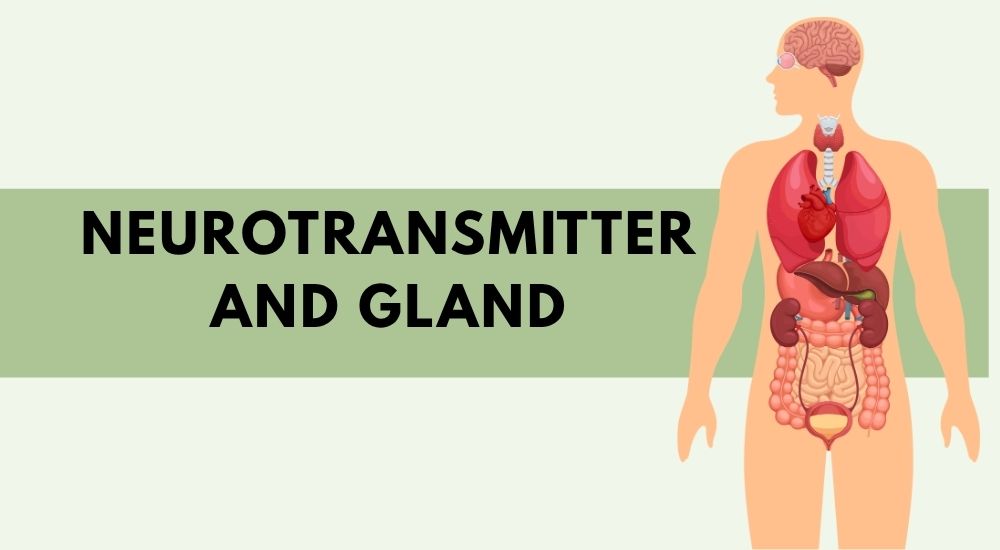
Imbalances of these neurotransmitters such as Serotonin, GABA, Norepinephrine and Dopamine are involved in anxiety (Martin, Ressler, Binder & Nemeroff, 2009)
People can be anxious due to learning. Experiencing traumatic events during early life like constantly being fun while reading in front of classes may have an impact on development of social anxiety. Observing someone else traumatic events or experience, observing someone get an excuse for showing anxiety symptoms can unconsciously make learning to do the same when facing difficult satiation. A child who receives reinforcement for avoiding social situations may develop social anxiety symptoms because he/she has learnt being rewarded.
Treatment
Exposure therapy (also known as Exposure Response Prevention and is type of CBT) is widely used treatment for social anxiety disorder (Kaczkurkin & Foa, 2015) in this therapy therapists gradually expose individuals to the discomfort situation and advise ways to manage their fear. For example, if giving a presentation is difficult, the therapist asks him/her to make a situation, give a presentation and train the techniques to overcome his/her fear at the same time. Exposure therapy can’t be done in a single case, if an individual shows difficulty during imagination, he/she should be brought back to real time. It has to be one at the time.
Cognitive therapy on the other hand views anxiety as individual perception and thinking about social situations, thus believing that changing their cognitive ability would modify their perception. Such distorted cognitive abilities are identified and disproved and then replaced with more rational thinking. Cognitive therapy performed better than exposure plus applied relaxation (Kaczkurkin & Foa, 2015).
Social skills training (like public speaking, rapport building) and relaxation techniques are also useful non pharmacotherapy.
References
- Stein, D.J., Lim, C.C.W., Roest, A.M. (2017). The cross-national epidemiology of social anxiety disorder: Data from the World Mental Health Survey Initiative. BMC Med 15, 143 doi. 10.1186/s12916-017-0889-2
- Chavira. D.A. & Stein M.B. (2005). Childhood social anxiety disorder: from understanding to treatment. Child Adolescent Psychiatric Clincals of North America. 14(4)
- Funk. M., Akimova. E., Spindelegger. C., Hahn. A,. et.al (2009). Social anxiety disorder: epidemiology, biology and treatment. Psychiatria Danubina, 2009; Vol. 21 (4)
- Kaczkurkin, A. N., & Foa, E. B. (2015). Cognitive-behavioral therapy for anxiety disorders: an update on the empirical evidence. Dialogues in clinical neuroscience, 17(3).
- Martin. E., Ressler. K.L., Binder. E. & Nemeroff. C.B (2009). The Neurobiology of Anxiety Disorders: Brain Imaging, Genetics, and Psychoneuroendocrinology. Psychiatric Clinics of North America. 32(3)