Goldberg- Who had an accident……..
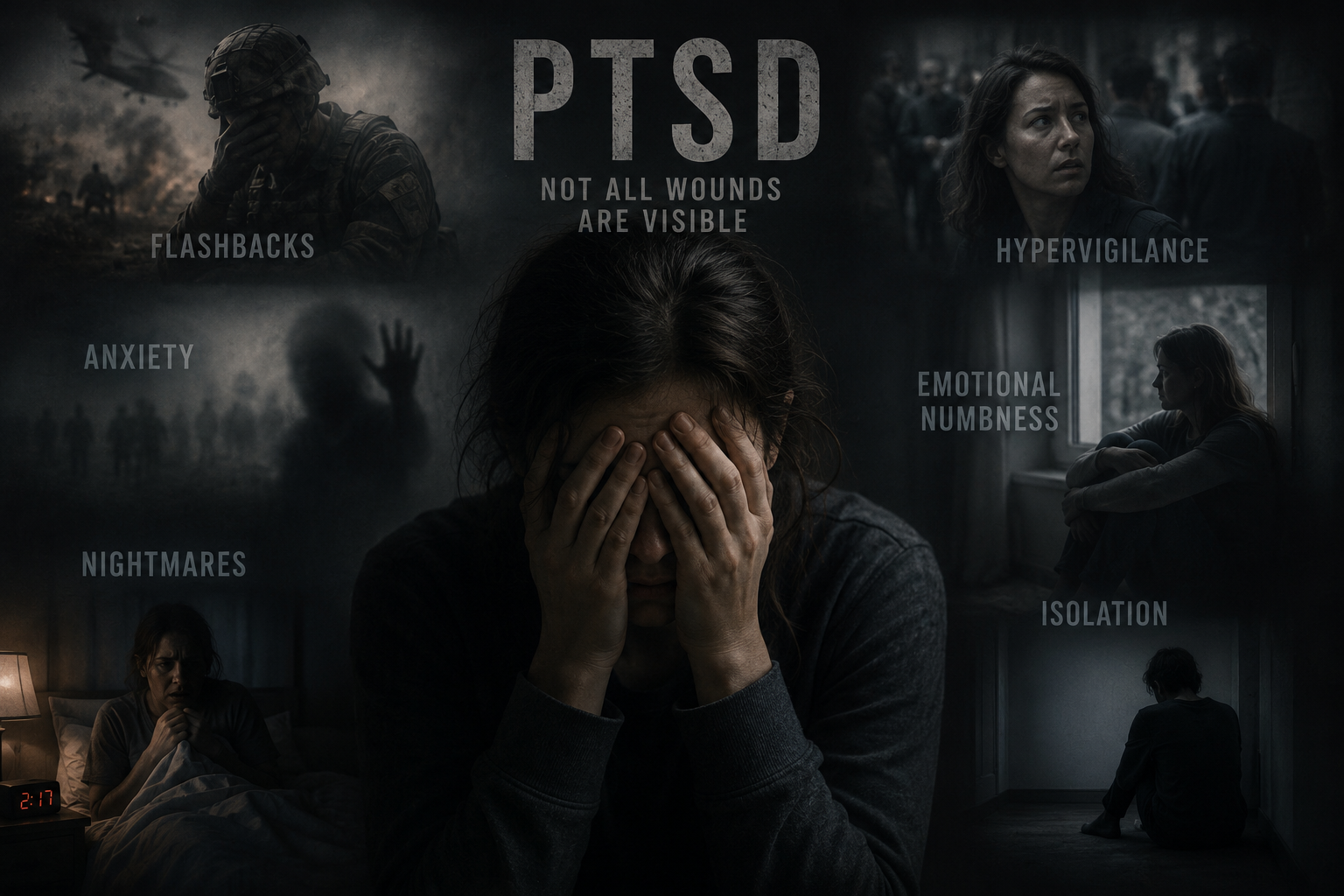
The essential feature of posttraumatic stress disorder (PTSD) is the development of characteristic symptoms following exposure to one or more traumatic events. This anxiety is developed after being involved or witnessing life threatening events such as death, accident, natural calamities, domestic violence and assault. Moreover, PTSD is stress disorder developed after individuals experiencing or witnessing actual death or threatened to death. PTSD was first discovered among war veteran, aftermath of war they were place in the rehabilitation center who then reported anxiety related symptoms after the months of event. So, this disorder was before known as shell shock during WW1 or battle (combat) fatigue syndrome in WW11. However this doesn’t mean that PTSD occur only in veteran, it affect every person equally. PTSD was first named in 1980 in DSM III.
Betty Goldberg, a 50-year-old business person visited to the psychologist reporting severe form of anxiety. He was feeling fear, guilt, shame, distrusting and chronically anxious. His wife find difficult to adjust with him and was thinking to divorce. He felt as though his life was falling apart. His business partner also complains that he has markedly diminished interest in his business. One year back when he was driving his bike with nephew he experiences a serious accident causing them a physical problem. His nephew had his hand broken and scratches over his hand and leg. It took him two months of complete bed rest to recover. Goldberg has also financial lost afterward. He then was tormented by the memories of his past, felt guilty over the event and had anxious memories even in his dream. He couldn’t drive his bike again, feeling that memories will come back.
To understand PTSD first we need to known about what is Trauma? Trauma is a psychological, emotional response to an event or an experience that is distressing or disturbing. In an above case, accident was a trauma for Goldberg. Traumatic event may be in different form such as sexual or physical assault, community violence (such as shooting, burglary), disaster (like landslide, earthquake, and hurricane), sudden or violent death of love one, serious injury like dog attack. To some individual this traumatic experience may triggers fear and anxious.
Try to remember the traumatic experience of yours (may be earthquake)? After days of experiencing or witnessing those events you may have been numbed, feared or anxious for days. It’s normal to be disturbed for someday when experiencing a threatening event. After being disturbed for a few days or months you may have moved one. But for certain individuals it is difficult to move, after a month of event they may still be disturbed or distressed about the event. When recalled they may show symptoms of anxiety, this is a sign of PTSD? If you remember the Nepal earthquake 2015, your heart may beat fast or even you may feel disturbed, this is indication of PTSD but not a PTSD itself. To be PTSD it should significantly disturbed individuals life. Do you have friends, when people talk about earthquakes start to severely panic or feel anxious? He/she may have PTSD. PTSD in simple terms is the stress disorder resulting from post traumatic events.
The following Diagnostic criteria apply to adults, adolescents, and children older than 6 years.
- Exposure to actual or threatened death, serious injury, or sexual violence in one (or more) of the following ways:
- Directly experiencing the traumatic event(s).
- Witnessing, in person, the event(s) as it occurred to others.
- Learning that the traumatic event(s) occurred to a close family member or close friend. In cases of actual or threatened death of a family member or friend, the event(s) must have been violent or accidental.
- Experiencing repeated or extreme exposure to aversive details of the traumatic event(s) (e.g., first responders collecting human remains; police officers repeatedly exposed to details of child abuse).
- Presence of one (or more) of the following intrusion symptoms associated with the traumatic event(s), beginning after the traumatic event(s) occurred:
- Recurrent, involuntary, and intrusive distressing memories of the traumatic event(s).
- Recurrent distressing dreams in which the content and/or affect of the dream are related to the traumatic event(s).
- Dissociative reactions (e.g., flashbacks) in which the individual feels or acts as if the traumatic event(s) were recurring. (Such reactions may occur on a continuum, with the most extreme expression being a complete loss of awareness of present surroundings.)
- Intense or prolonged psychological distress at exposure to internal or external cues that symbolize or resemble an aspect of the traumatic event(s).
- Marked physiological reactions to internal or external cues that symbolize or resemble an aspect of the traumatic event(s).
- Persistent avoidance of stimuli associated with the traumatic event(s), beginning after the traumatic event(s) occurred, as evidenced by one or both of the following:
- Avoidance of or efforts to avoid distressing memories, thoughts, or feelings about or closely associated with the traumatic event(s).
- Avoidance of or efforts to avoid external reminders (people, places, conversations, activities, objects, situations) that arouse distressing memories, thoughts, or feelings about or closely associated with the traumatic event(s).
- Negative alterations in cognitions and mood associated with the traumatic event(s), beginning or worsening after the traumatic event(s) occurred, as evidenced by two (or more) of the following:
- Inability to remember an important aspect of the traumatic event(s) (typically due to dissociative amnesia, and not to other factors such as head injury, alcohol, or drugs).
- Persistent and exaggerated negative beliefs or expectations about oneself, others, or the world.
- Persistent, distorted cognitions about the cause or consequences of the traumatic event(s) that lead the individual to blame himself/herself or others.
- Persistent negative emotional state (e.g., fear, horror, anger, guilt, or shame).
- Markedly diminished interest or participation in significant activities.
- Feelings of detachment or estrangement from others.
- Persistent inability to experience positive emotions (e.g., inability to experience happiness, satisfaction, or loving feelings).
- Marked alterations in arousal and reactivity associated with the traumatic event(s), beginning or worsening after the traumatic event(s) occurred, as evidenced by two (or more) of the following:
- Irritable behavior and angry outbursts (with little or no provocation), typically expressed as verbal or physical aggression toward people or objects.
- Reckless or self-destructive behavior.
- Hypervigilance.
- Exaggerated startle response.
- Problems with concentration.
- Sleep disturbance (e.g., difficulty falling or staying asleep or restless sleep).
- Duration of the disturbance (Criteria B, C, D and E) is more than 1 month.
- The disturbance causes clinically significant distress or impairment in social, occupational, or other important areas of functioning.
- The disturbance is not attributable to the physiological effects of a substance (e.g., medication, alcohol) or another medical condition.
Comorbidity
Individuals with PTSD are 80% more likely than those without PTSD to have symptoms that meet diagnostic criteria for at least one other mental disorder (e.g., depressive, bipolar, anxiety, or substance use disorders). Comorbid substance use disorder and conduct disorder are more common among males than among females. In children they may also be diagnosed with oppositional defiant disorder and separation anxiety (DSM-5, 2013).
Epidemiology
In context to Nepal there has been significant research for PTSD after the 2015 earthquake. In a study conducted by Thapa, Acharya et.al in 2018, they found that out of 198 individuals, 53 of them (38 female and 15 male) have PTSD. In another study conducted by Shrestha, it has also shown similar data among gender ratio, Females are significantly higher than males.24 % out of 558 individuals in Bhaktapur along reported PTSD in a data collected by Shrestha, Shrestha et.al 2019. Study from Acharya, Bhhat & Assannangkorchai, 2018 found that PTSD prevalent in children between 7-16 years among them 51% (n=800) of children has moderate to severe PTSD symptoms. Children from suburban areas and followers of Buddhist religion have PTSD compared to urban and Hindu religion.
PTSD affects approximately 3.5 percent of U.S. adults and an estimated one in 11 people will be diagnosed with PTSD in their lifetime (APA, 2013).
Cause
Large literature has mentioned the structure of the hippocampus in PTSD. Many sMRI studies have found that individuals with PTSD have significantly smaller hippocampus size of hippocampus in traumatic people then non-traumatic people (Bremner, 1995). Similarly another brain region including prefrontal cortexes is also a key component of neurocircuitry in PTSD (Karl et al., 2006).
Functional neuroimaging studies have reported exaggerated amygdala activation in response to trauma-related stimuli. Individuals with PTSD show greater or exaggerated amygdala activation during the acquisition of conditioned fear (Bremner, 2005). Amygdala plays a crucial role in the detection of threat, fear learning and experiencing.
In the response to stress, several biological systems are activated for flight and fight response. The pituitary gland in the brain stimulates cortisol hormone from adrenal gland which activates to respond to the short term demands of stressor (Munch, Guyre & Holbrook, 1984). There is evidence that a hormonal system known as the hypothalamic-pituitary-adrenal (HPA) axis becomes disrupted in people with PTSD.
Pre-traumatic psychological and social factors of individual alike social support, marriage, social disruption, bereavement, work environment can also trigger PTSD. For example lack of social and emotional support from friends or family, blaming the individuals for the event can result in guilt which in turn plays a role in influencing symptoms. If individuals have a supportive and border group of support it is much less likely to develop PTSD after trauma. In the 2015 earthquake of Nepal, the larger cluster of support from all around Nepalese helps to condense the case of PTSD.
Treatment
There is the variety of psychotherapies of treatment available to the people who are experiencing their traumatic disorder. Trauma focused cognitive-behavioral therapy (TF-CBT) is one of the effective treatments in which individuals help manage and cope their emotional and mental part of their anxiety. They are encouraged and educated to challenge the fears rather than avoiding them. This therapy helps to think in a different way about traumatic experiences. It changes cognitive components by modifying their distorted thought about traumatic events and behavioral components confront the memory of trauma or situation in a safe environment (Imagine).
Eye movement desensitization and reprocessing (EMDR) asks the individual to focus on their traumatic experience and at the same time they are asked to move on sensory input like eye movement, (also can be done with finger movement). Keeping attention to both trauma and movement would help them to process difficult memories, emotion and thoughts related to your trauma.
Cognitive restructuring also acknowledges individuals to have sense of their bad memories. Through this technique they realize that it’s their cognitive pattern to remember the event as trauma. They may feel guilt or shame about something that is not their fault. The psychologist helps them to think about what has happened in a realistic way.
Prolonged exposure therapy involves individuals to confront their traumatic events either in mental, imaginary or actual scene (in vivo exposure) and help them in reducing their anxiety. This therapy is done in the presence of psychologists, as they are asked to recall or go back to their traumatic events in their imagination, once recalled individuals show signs of anxiety and psychologists educate them to have control over their anxiety through different techniques.
Trauma Sensitive Yoga, an especial type of yoga developed particularly to people experiencing trauma can be an essential technique for people who are experiencing PTSD. In this particular exercise they focused on breathing and light movement in which they learn to be in the present, practice making choices, sense the environment and connect with the body and the surrounding through breath. Another form of mediation also includes acupuncture a Chinese’s treatment which is safe and cost effective treatment for PTSD.