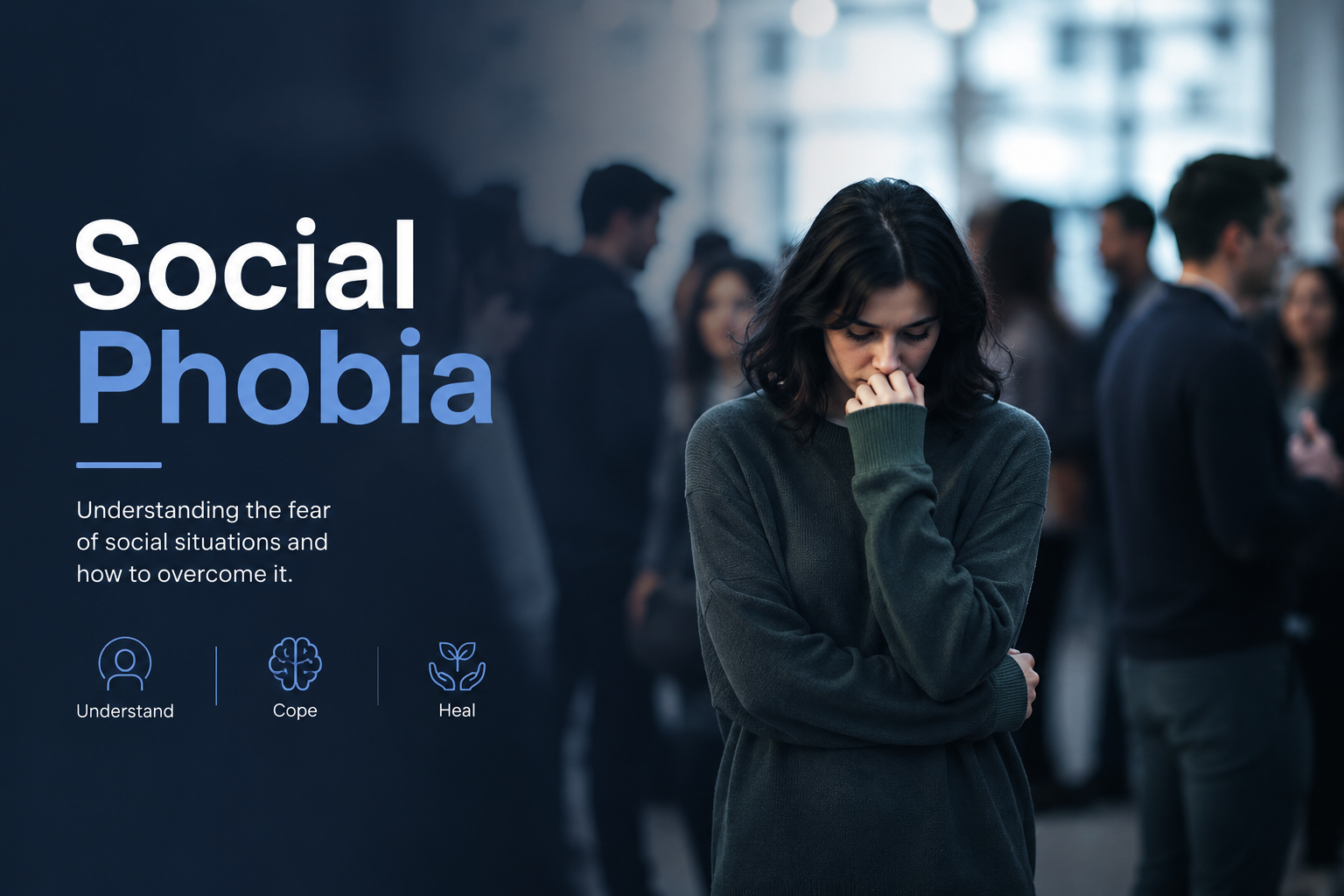
A Specific phobia is an intense and persistent fear towards a precise object, situation, or activity. The people usually have extreme fear about a certain situation or object, and perceive it as a danger or threat even though it is not. The amount of fear experienced may vary with proximity to the feared object or situation and may occur in anticipation or in the actual presence of the objector situation (DSM-5). Some individuals may even trigger social phobia even they imagine or see the object or situation. For example someone who had a phobia of blood would react phobic if they saw blood on T.V. There are more than 250 subtypes of phobia; some of them are hydrophobia (water), cluster phobia (open space) etc.
Specific phobias can be categorized into the following subcategories:
- Animals (spiders, insects, dogs)
- Natural environment type (heights, storms, water)
- Blood injection injury type (needles, invasive medical procedures)
- Situational type (airplanes, elevators, enclosed spaces)
- Other types
Diagnostic criteria for Social Phobia
- Marked fear or anxiety about a specific object or situation (e.g., flying, heights, and animals, receiving an injection, seeing blood).
- Note: In children, the fear or anxiety may be expressed by crying, tantrums, freezing, or clinging.
- The phobic object or situation almost always provokes immediate fear or anxiety.
- The phobic object or situation is actively avoided or endured with intense fear or anxiety.
- The fear or anxiety is out of proportion to the actual danger posed by the specific object or situation and to the socio cultural context.
- The fear, anxiety, or avoidance is persistent, typically lasting for 6 months or more.
- The fear, anxiety, or avoidance causes clinically significant distress or impairment in social, occupational, or other important areas of functioning.
- The disturbance is not better explained by the symptoms of another mental disorder.
Comorbidity
Specific phobias are often linked with panic attacks. According to DSM-5 Specific phobia is frequently associated with a range of other disorders, especially depression in older people. Anxiety disorders, depressive and bipolar disorders, substance related disorders, somatic symptoms and related disorders, and personality disorders are also common. Specific disorders are also associated with cardiac diseases, gastrointestinal diseases, respiratory diseases and thyroid diseases (Witthauer, 2016).
Epidemiology
Specific fears occur in a majority of population (Myers et al., 2015). In a large study (n=5877) higher prevalence of comorbid with depression, whereas others study have found no association (Choy, Fyer & Goodwin, 2007). The median age of onset for specific phobia is 7 years of age, the youngest of any anxiety disorder (except separation anxiety disorder (Kessler, Berglund et al., 2005). According to the Diagnostic and Statistical Manual of Mental Disorders, Fifth Edition (DSM-5), the year-long community prevalence estimate for specific phobias is approximately 7%-9%. The prevalence rate varies as per culture. In another larger study (n=1000) it was found that female are more likely to develop phobia than to male (Fredrikson, Annas, Fishcer & Wik, 1996). Specific phobia affects about 5% to 10% of the US population (Samra & Abdijadid, 2020).
Etiology