





Autism Spectrum Disorder (ASD)
Table of Contents
Clinical Pictures
Autism spectrum disorder (ASD) is a neurological and developmental disorder which significantly affects an individual’s way of perceiving, socializing, communicating and learning. This disorder typically begins in early childhood and can last throughout a person’s life. Autism spectrum disorder (DSM-5) is umbrella disorders that include autistic disorder, Asperger syndrome and childhood disintegrative disorders which were separate disorders in DSM IV TR.
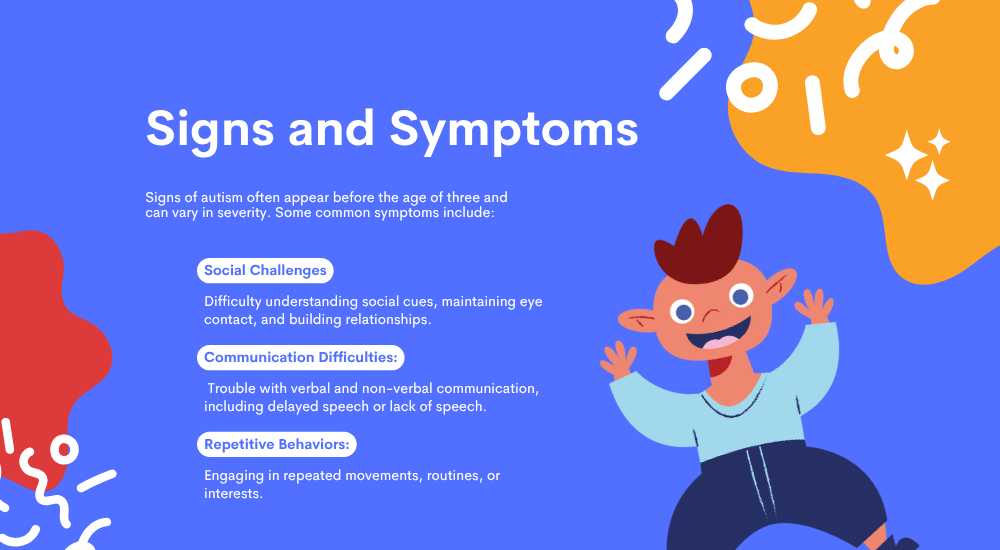
The core features of ASD are 1) impairment in social communication and interaction and 2) restricted and repetitive patterns of behaviour, activities and interests. Autism differs from person to person in severity and combination of symptoms. They are first diagnosed in childhood presenting around 2-3 years old, but some children may develop it until toddlerhood.
Impairment in social communication and interaction
Children with this problem in ASD find it difficult to communicate with others; they poorly integrate their verbal and nonverbal communication. Use of gestures, eye contact, body languages, facial expression is deficits to understand. They fail to start back and forth for conversation and fail to establish social interaction. Difficulties in sharing imaginative play or in making friends; to absence of interest in peers are common.
Restricted, repetitive patterns of behavior, interests, or activities
Children within this category flap their hands or toes frequently, playing with toys in an uncommon way or playing the same games or following the same structure and predictable routine, their interests are generally restricted in nature compared to his/her aged child. They experience sensory aspects in unusual and uncommon ways: excessive smelling/touching of objects, fascination with lights and movement, being overwhelmed with loud noises and others.

Diagnostic Criteria Autism Spectrum Disorder
A. Persistent deficits in social communication and social interaction across multiple contexts, as manifested by the following, currently or by history.
- Deficits in social-emotional reciprocity, ranging.
- Deficits in nonverbal communicative behaviors used for social interaction, ranging.
- Deficits in developing, maintaining, and understanding relationships, ranging.
B. Restricted, repetitive patterns of behavior, interests, or activities, as manifested by at least two of the following, currently or by history.
- Stereotyped or repetitive motor movements, use of objects, or speech.
- Insistence on sameness, inflexible adherence to routines, or ritualized patterns of verbal or nonverbal behavior.
- Highly restricted, fixated interests that are abnormal in intensity or focus.
- Hyper- or hyporeactivity to sensory input or unusual interest in sensory aspects of the environment.
C. Symptoms must be present in the early developmental period
D. Symptoms cause clinically significant impairment in social, occupational, or other important areas of current functioning.
E. These disturbances are not better explained by intellectual disability or global developmental delay.
Comorbidity
Autism spectrum disorder can often come with other conditions. It might appear at any time during a child’s development while someone may develop later in adolescence or adulthood. Anxiety is common, Epilepsy and type of language disorder is also associated with epilepsy (Tuchman & Rapin, 2002). ADHD, OCD and depression are the most commonly diagnosed with ASD. Gastrointestinal symptoms (abdominal pain, diarrhea, bloating) are a common comorbidity in patients with ASD (Mayer, Padua & Tillisch, 2014). Children with ASD are also likely to develop fragile x syndrome (Intellectual disability) with effect 2 to five percent of ASD children and language specific disorder.
Prevalence
ASD once was considered as a rare disorder affecting 1 in 10,000 but its prevalence rate has been increased and has occurred in all racial, ethnic, and socioeconomic groups. In 2014, estimated ASD prevalence was 16.8 per 1,000 (1 in 59) children 8 years of age (Baio et al., 2018). The overall estimated ASD prevalence for Asian/Pacific Islander children was 13.5 per 1,000 (Baio et al., 2018). Boys are four times more likely to be diagnosed with autism than girls. Most children were still being diagnosed after age 4, though some of them can be diagnosed as early as age of 2.
In a study by Shrestha et.al (2019), on 246 children with ASD, the mean age of disorder (AoD) was 58 months. It’s believed that there are 300,00 people in Nepal currently living with autism (Austism Care Nepal & Ministry of Education, 2019). Nepal lacks authentic reports but it’s believed that the autism rate has been increased by 15 % annually (Republica Newspaper, 2018).
Etiology
Autism spectrum disorder has emerged as a public health concern, many researchers are concerned to determine what causes ASD. Both genetic, non-genetic and environmental influences have a vital role in causing ASD.
Autism is heritability, twins studies projected that autism heritability is over 90% + i.e that parents having autism will 90% likely to have their children with autism (Freitag, 2007). Families that have one child with ASD have about a 20% chance of having another child with ASD (Ozomoff et.al, 2011). Studies have shown that if one identical twin has the diagnosis, then there is a 30 – 40% chance that the other twin will develop ASD. This concordance is hardly ever seen with non-identical twins (Bailey et al, 1995).
Prenatal or perinatal infections by viral agents such as rubella and cytomegalovirus, as well as exposure to toxic agents, such as thalidomide, valproic acid and alcohol, are some of the best-known environmental causes of ASD (Chess et al., 1978). Studies have shown that a child may develop ASD if one of their parents is in advanced age, has a problem with diabetes or bleeding and is in use of drugs during pregnancy (Roullet, Lai & Foster, 2013). Pregnancy and birth complications like prematurity (before 26 weeks), low birth weights, multiple pregnancies (twins, triplet), hypoxia during childbirth (Kolevzon, Gross & Reichenberg , 2007) can cause ASD.
This is a hypothesis that lack of vitamin D deficiency can cause ASD, but it’s yet to be studied. Lead (Zafeiriou, Ververi, & Vargiami, 2007) and Mercury poisoning (Austin 2008) is a risk factor for autism.
The MMR (Measles, Mumps and Rubella) vaccine is one of the most debated issues in underlying the cause of ASD, some believe that it is the origin of autism. However, the latest investigation has found that the claim is false (Pietrantonj, Rivetti et.al, 2020).
Treatment
The major agenda in treatment of ASD children is to maximize children’s ability to function approximately well in social communication & interaction and behaviour. Treatment options include a variety of therapies behaviour and communication therapies, educational therapies and family therapies can be beneficial. Such therapies can reduce symptoms, improve cognitive and living standards of children. However medication can not improve the core signs of ASD but can control symptoms.
Behaviour and communication therapies focused on appropriate behaviour and communication skill development in children. They address problematic behavioral, social, language problems of children by applying different strategies like classical, operant, social or observational learning. Under communication speech therapy can be given depending upon the child requirement. Educational therapies are performed by educational experts who educate the children to improve their fundamental skills through a system of education; naturalistic teaching strategies can be effective. Family therapies like in other disorders act playful in ASD as well, these therapies are usually given to parents who have children with ASD. This therapy focuses on how parents can play and interact with children to improve the core problem of ASD.
Social skills and occupation therapy, two different types of therapy, teaches children skills to be independent from parents. In time social skills help to improve the interaction with others and problem solving mechanisms.
