

































Sampling Design, Probability and Non Probability
Sampling in research means selecting the group of respondents that provide data for the study. It is selecting the group of participants that researchers will actually collect the data for their research. For example, if the researcher wants to study the opinion of the students of the university, they may collect the sample of 100 students, the process of selecting 100 students from a definite population is known as sampling.
Table of Contents
It’s methods in which every member of the population has a known and unusually equal or measurable chance of being selected for the study. It involves selecting participants randomly which helps reduce bias and increase the likelihood that samples represent the larger population.
Types
- Probability sampling involves random selection, where everyone has equal chance of getting selected for study
- Non-probability sampling involves non-random selection based on convenience or other criteria, where everyone has no equal chance of getting selected for study
Probability Sampling
Probability sampling in general is also known as random sampling. It means that every member of the entire population has an equal chance of being selected for the study. It is mainly used in quantitative data which allow researchers to make strong statistical inferences about the whole group. It is the most valid choice when researchers want to produce results that are representative of the whole population.
There are four main types of probability samples.
- Simple Random
- Systematic
- Cluster
- Stratified

Simple Random
In a simple random sampling every member of the population has an equal chance of being selected. However, the researcher in their sampling frame should include the whole population. To use this type of sample, researcher can use tools like random number generators automated software or some other techniques.This is one of the prefered methods.
For example, if you want to select a sample of N=100 out of 1000 students of Z School. You assign a number to each student in the school from 1 to 1000 and use a random number generator to select 100 students. Those whose number are picked are selectd for the study.

Systematic
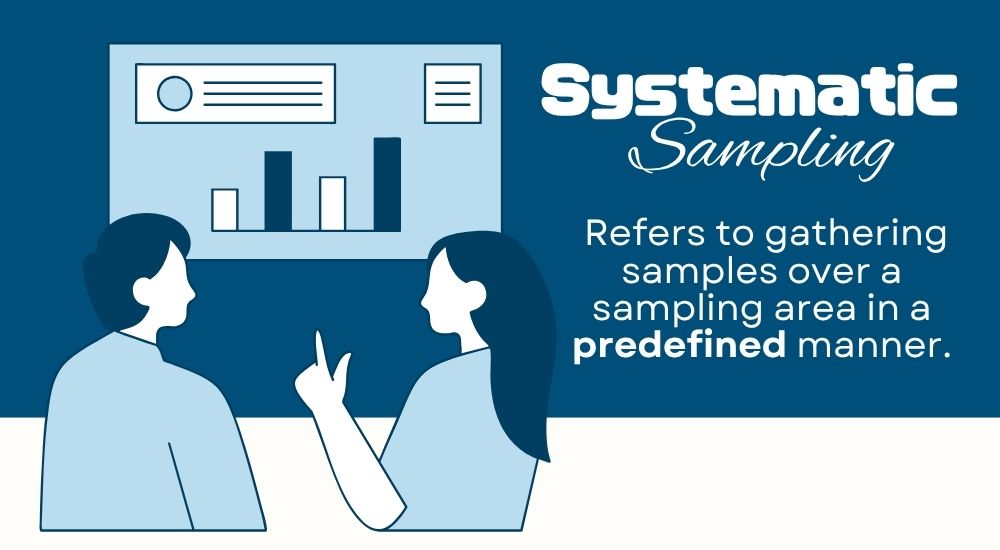
Systematic sampling is similar to simple random sampling, but it is usually slightly easier to conduct as a participants are selected to be part of sample using a fixed interval. Every member of the population is listed with a assigned number same as simple random sampling. But instead of randomly generating numbers individuals are chosen at regular intervals.
For example, if you want 100 students among 1000 students of Z School. You randomly select a initial number 6 (by simple random), from number 6 onwards every 10th person on the list is selected (6,16,26,36 and so on) and you end up with a sample of 100 people.
Stratified
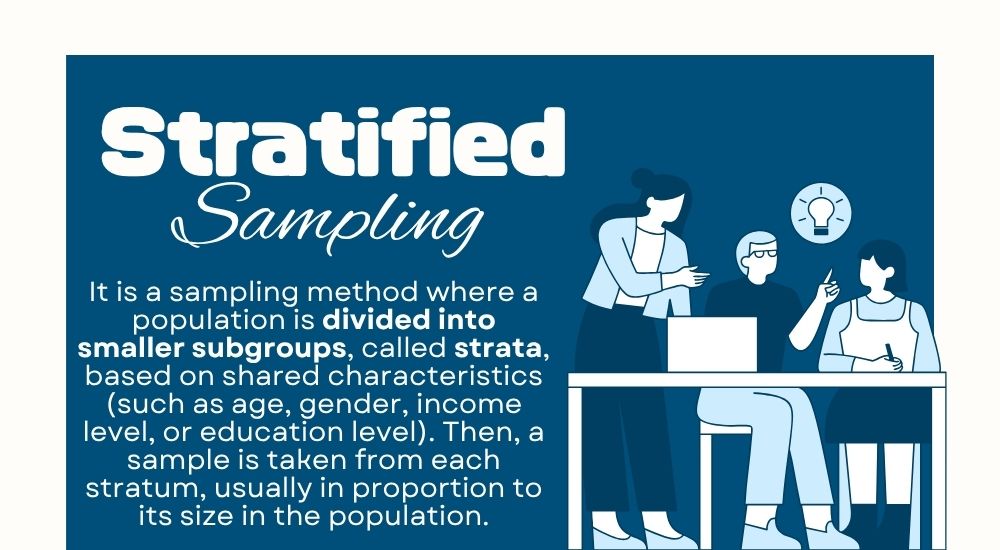
A stratified is a step up from complex to simple random. It’s a probability technique which involves dividing a study population into sub-population, strata or subgroups that differ from one and another.They are subgroups based on the basics of demographic character like gender, ethnicity, sex, religion or other.
For example, a psychology researcher wants to study academic stress among 10,000 university students. The research may divide the students into four strata based on their year of study like first, second, third and fourth and randomly select participants from each group. This ensures that students from all academic years are represented in the study and make the sample more representative of the overall population.
Cluster
It’s a techniques in which the researchers divide the population into naturally occurring groups known as clusters and then randomly selects these clusters to participate in the study, But each subgroup should have similar characteristics to the whole sample.
For example, a psychology researcher want to study academic stress among university students across Nepal. Instead of selecting individual students from each university, the researcher may consider each university as a cluster and randomly select two universities by using simple random and collecting the data from all students or a randomly selected sample of students within each chosen university. This type of sampling is useful when the population is geographically dispersed and is difficult or expensive to reach individuals participants
Non Probability Sampling
Non probability sampling also known as a non random sampling is a second type of sampling methods where not every member of the population has equal or known chance of being selected as a sample for the study, instead participants are chosen based on factors such as researcher convenience, judgement, special characteristics or as per research purpose.
There are different types of non probability sampling
- Convenience
- Purposive/ Judgemental
- Quota
- Snowball
Convenience
It is one of the easiest sampling methods where researchers select the participants for the study who are easily accessible, available and willing to be part of the study as the participants. In these methods the researcher chooses individuals who can be reached easily rather than selecting them randomly from the entire population. It is commonly used when the researcher has less time and limited resources.
For example: a psychology student survey 100 students who are available in their college cafeteria about stress
Purposive/ Judgemental
Purposive sampling, also known as judgemental sampling, is no probability techniques or method in which researchers deliberately select participants who possess specific characteristics, knowledge or experience relevant to the research. The selection is based on the researchers judgement and the specific objectives of the study. this method is particularly useful in qualitative research and studies involving specialized or specific populations.
For example: a researcher studying workplace burnout among psychologists intentionally selects a practicing psychologist with at least 5 years of experience.
Quota
quota is another method in which researchers divide the population into specific groups and select a predetermined number of participants from each group. This technique allows researchers to ensure that certain characteristics such as age, gender, education or occupation are represented in the sample.
For example: A researcher wants 100 participants 50 males and 50 females and recruit people until each quota is filled.
Snowball
Snowball sampling is a method in which existing participants help the researcher identify or recruit other potential participants from their social or professional networks. This method is particularly useful when studying hard to reach, hidden or specialized population for whom it is difficult to develop a sampling frame
For example:Researchers studying a herd to reach population interviews one participant who refers to two others, who refers to additional participants.

