

































Psychoanalytic Approaches
Psychoanalytic Approaches also sometimes known as Freud approaches developed by Sigmund Freud (1856-1939). Psychoanalytic Approaches is considered as a game changer approaches in psychopathology. Psychoanalytic Approaches theory was the beginning of a new ear for psychology. Though this theory is criticized nowadays for being rationalist it was the most popularized theory back in the 19th century, this approaches gave birth to other approaches. There are three key assumptions to his theories Psychoanalytic Approaches are.
- Personality structure: id, ego and superego
- Level of consciousness
- Psychosocial stages of development
Table of Contents
Personality structure
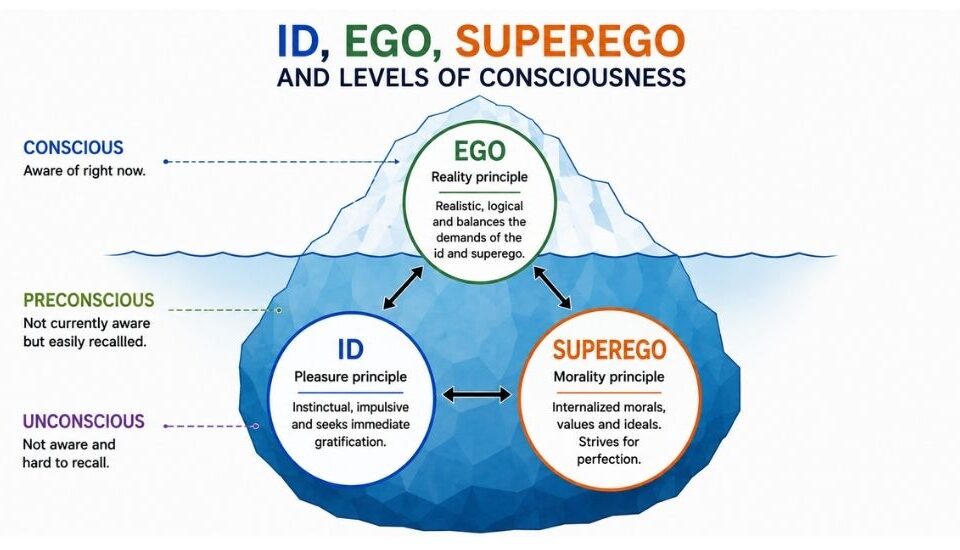
Freud constructed a model of personality with three interlocking parts id ego and superego in his Psychoanalytic Approaches. Each of them has their own characteristics. To understand it more clearly you can imagine a weighing scale machine, two plates are id and superego whereas pin at the middle of plates is ego.
Id is the unorganized reservoir of wishes or passions related to our sexual and aggressive drives. It acts instantaneously without giving much thought to what is right and what is wrong. It’s based on the pleasure principle and follows the concept of right now. For example, if someone wants to drink alcohol while in a meeting, Id wouldn’t think of anything but urges the individuals to have alcohol in any cases which means he/she would be drinking alcohol in the middle of meetings.
The Super-Ego is related to the social or the moral values that an individual developed as they mature as we learn moral and ethical standards by parents, teachers and culture. Super ego is the storehouse of moral and ethical standards taught by parents, teachers and culture. It is a storehouse of moral principles. For example, if someone wants to drink alcohol he would drink it because Superego believes that drinking alcohol is in the category of sin.
Ego is based on the reality principle. It acts as a mediator between Id and the Super ego. Ego is the logical and the conscious part of the mind. Ego tries to solve the conflict arising by Id and Superego by understanding the reality of demand and moral concepts arises. For example, when an individual thinks about drinking alcohol in the middle of a meeting, ego would rather decide to drink only after the meeting or in the evening.
Freud believes in his Psychoanalytic Approaches is that our abnormality or even our personalities depends on id, ego and superego. We act normal until ego is able to balance both id and superego. If any of the latter two is strong we act abnormally. For example, if id was strong, for example, he/she will have alcohol while in a meeting or if superego was strong, he/she would think of norms every time when there is an urge to drink.
Levels of Consciousness
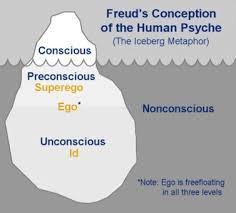
Freud describes three different layers of mind they are consciousness, preconscious or sub conscious and unconscious in explaining his Psychoanalytic Approaches.
According to Freud, consciousness is the part of the mind about which we are aware of. This is where our current thoughts, feelings, and focus live. For example the things you are reading right now. The preconscious comprises thoughts or activities that are stored in memory that are easily made conscious; it needs an effort to remember. For example your birth date or food you had last night. You were not consciously thinking about it but when asked you can easily bring it to level of consciousness.
Similarly unconscious is another part of mind which you can’t easily recall or reachable; it resides outside of conscious awareness. It gives rise to important needs and influences our behavior. The larger layers of mind are unconscious. For example, call your female teacher a mother during the classroom.
Freud believes that in order to understand the Psychoanalytic Approaches of individuals we should understand his/her unconsciousness; it is where the problematic behavior resides. Dream interpretation, storytelling or writing, TAT, Rorschach test are few techniques to understand unconsciousness.
Psychosexual stages of development
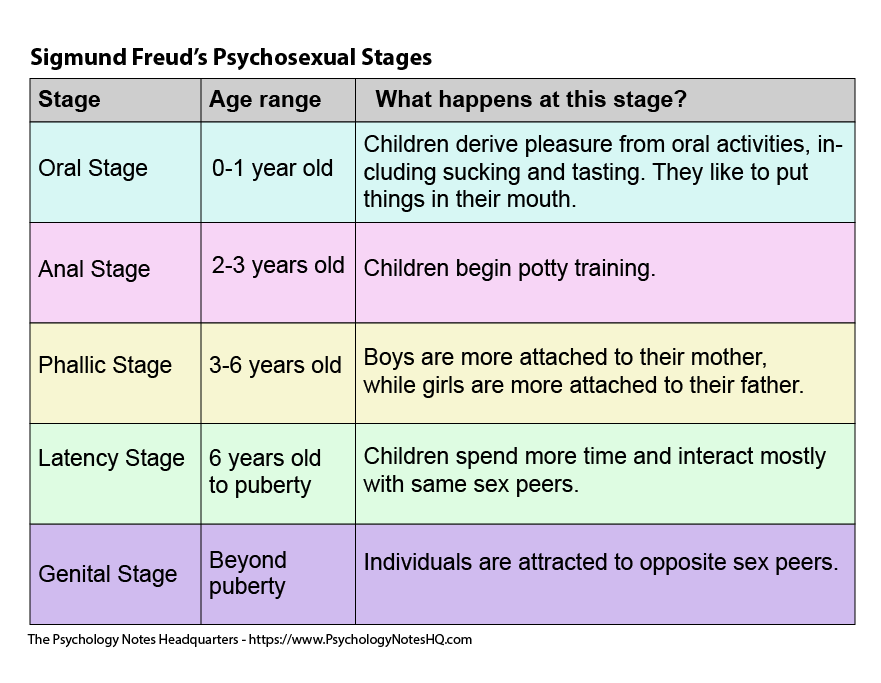
Another stepstone of Psychoanalytic Approache is psychosexual stages of development. Freud believes that infants from birth have a drive of sex (instinctual libido) focusing on different parts of the body. To be more specific, a child from toddler has a desire of having pleasure seeking activities or desire of sex (not to have sex). However libido resides in different parts of the body not only to the sexual organ but also to the mouth, sensitive to touch, genitals and anus. Children try to fulfill pleasure at the finest level in each stage of psychosexuality.
But a child may go unsatisfied or over-satisfied with the fixation required for that stage which means the child may receive maximum or minimum pleasure then required for that stage. If so Freud believed that personality related problems may arise in later stages of life. However the child continues to fulfill the pleasure that was required for an old stage even moving into a new stage.
In the oral stage (birth to 1 year) a child libido is located in their mouth. Meaning the mouth is the primary source of pleasure. They explore the world by putting things in their mouths like chewing or sucking things, and contact mothers with breast feeding. If fixation occurs in this stage children in adulthood may have problems with nail biting, thumb-sucking, overconsumption of alcohol/smoking and overeating.
In the anal stage (1 to 3 year) a child libido is focused on anus and bladder. Freud believed that during this stage, toilet training and learning to control bowel movements and bladder are a major source of pleasure. If fixation occurs, individuals in later life may develop obsessive compulsive behavior or disorder, he/she may try to be perfectionists. Personalities of children in later life depend upon the teaching mechanism of parents; it may be liberal or harsh training.
In the Phallic stage (3-5 year) the erogenous zone is onto the genitals, specifically the penis. In this stage boys have oedipal complexes, a wish to have sexual attachment with their mothers. To win the approval of mother, boy tries to become like father. While girls shift away from mother and get closer to father, an experience labeled as Electra complex. The male child tries to copy the behavior of the father, as he sees a certain pattern of behavior, ideas of right and wrong of father that gives joy to mother. The same applies to female children who become more like mothers to win the heart of their fathers.
In latency (6 – puberty) period sexuality is largely repressed, they mostly spend their time with same sex friends and asexual activities like learning, hobbies, and social relationships. Freud believed failure to move through this stage could result in lifelong immaturity, or the inability to have and maintain happy, healthy, and non sexual relationships as an adult.
Puberty mark the period of genitals, it is where libido remerges. Individuals begin to have strong sexual interest in the opposite sex and practice sexual intercourse. If the stage is successful, individuals will have heterosexual intercourse and develop loving, lifelong relationships with someone of the opposite sex.
Criticism
Psychoanalytic Approaches have been criticized heavily by the behavioural perspectives, because they rely on rationalist theory which is based on logic, they are unobservable, unfassifiable concepts rather than measurable data.
Some key criticism of Psychoanalytic Approaches are as follow
- lack of scientific evidence
- focused on observable behavior
- ineffectiveness of inner exploration
- lack of controlled experiment
- focused on sex to explain psychosexual stages
However this Psychoanalytic Approaches has gained worldwide attention as this was first school of thought in psychology.
