






DSM-5-TR
Table of Contents
Clinical Description
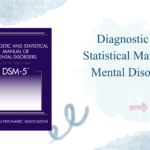
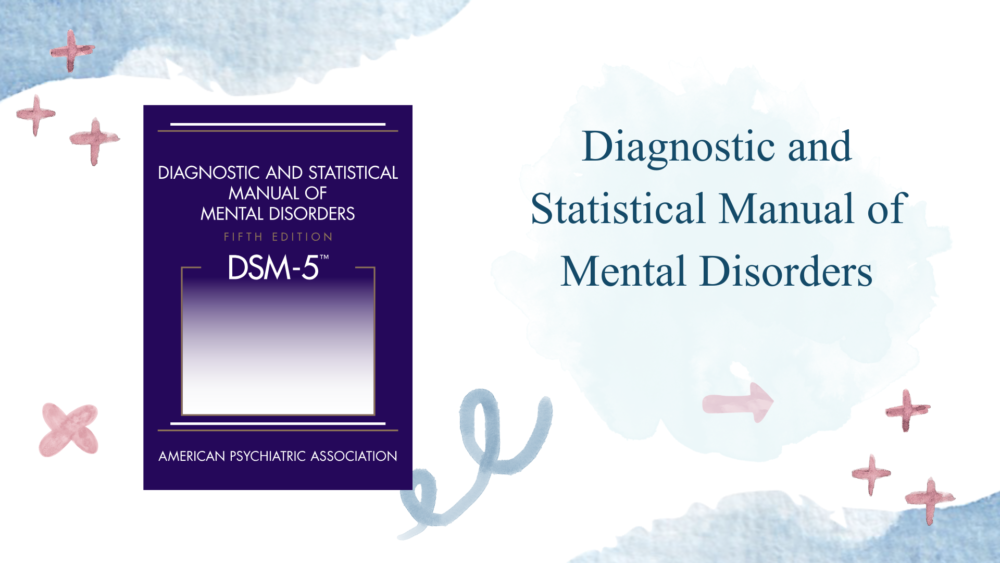
The Diagnostic and Statistical Manual of Mental Disorders widely known as DSM is the instruction book for mental health professionals in the United States and other countries. It’s a hand book guide for mental disorders which contains clinical description, diagnostic criteria, and treatment to each of mental disorders.
Its importance to psychologists and other mental health professions is just similar to Geta is to Hinduism and Bible to Christianity. It is a common language for mental health professionals to generalize single diagnoses practices all over the world.
The DSM is non-theoretical and focused mostly on describing symptoms as well as statistics concerning which gender is most affected by the illness, the typical age of onset, the effects of treatment and common treatment approaches.
Though much of the history of psychology is in Europe, DSM history is in the US.
The first attempt of developing a classification system can be traced back to 1840; when the government of America developed single categorized “idiocy/insanity” for census purposes. Their aim was to collect a number of idiocy/insanity people living in the US. Later in 1844 the government recognized the Association of Medical Superintendents of American Institutions for the Insane whose accountability was to people who were insane. Later the same organization in 1892 changed its name to American Medico-Psychological Association, and in 1921 American Psychiatric Association (APA).
Frederick H. Wines in 1880 developed seven categories of mental illness: dementia, dipsomania (uncontrollable craving for alcohol), epilepsy, mania, melancholia, monomania, and paresis. These seven categories were also used for the US Census of 1888. These categories were also adopted by the American Medico-Psychological Association (Deyoung 2013).
In 1917, together with the National Commission on Mental Hygiene (now Mental Health America), the American Medico-Psychological Association developed a new guide for mental hospitals called the Statistical Manual for the Use of Institutions for the Insane which include 22 different mental disorder (Statistical manual for the use of institutions for the insane, 1918).
Though world wars were fundamentally wrong, it was a huge blessing for psychology. World war saw many veterans and others people suffered psychologically along with physically. Researchers, psychiatric, psychologists and other health professionals studied the ranges of mentally disorders people had which gave a dimension to the classification system. Just after World War II in 1952 APA published its first the Diagnostic and Statistical Manual of Mental Disorders (DSM I) which includes 106 mental disorders including homosexuality. DSM I was influenced by psychoanalysis perspective and much of the people in APA were champions of psychoanalysis.
Second edition of Diagnostic and Statistical Manual is DSM II which was published in 1968. It was similar to DSM I, but the number of mental disorders was added up to 182. DSM II, seventh printing removed homosexuality as a mental disorder. DSM II was more like an evidence based and scientific classification system.
DSM III was published in 1980 which included 265 disorders. In 1987, DSM-III-R (revision version of the DSM-III) was published, six different disorders included earlier were removed while several others were added. DSM-III-R includes 292 disorders. DSM III includes a multi-axial approach for the first time in its history.
In 1994, DSM-IV was published, listing 410 disorders. DSM IV includes clinically significant distress or impairment in social, occupational, or other important areas of functioning as criteria for diagnosing half of the mental disorder. A text revision of DSM-IV (DSM-IV-TR) was published in 2000. Number of disorders was not added or removed. A little information on each diagnosis was updated. The DSM-IV-TR was organized into a five-part axial system i.e Axis I, II, III, IV, V.
The latest version Diagnostic and Statistical Manual of Mental Disorders DSM-5 was published in 2013. The fifth version was published after twenty years. DSM-5 is the result of extensive research, dialogue with hundreds of international mental health experts for 10 years. Definition of disorder was specified and diagnoses were extensive. There were a total of 541 diagnostic categories, an increase of nearly 160 categories compared with the DSM-IV.
With the adaptation of Diagnostic and Statistical Manual 5 the APA eliminated the longstanding multi-axial system for mental disorders.
Pro and Cons of DSM
Although each revision version improves upon the previous version, Diagnostic and Statistical Manual stills is controversial for several reasons (Stephanie & Caroyn, 2016). Unfortunately, no edition of the Diagnostic and Statistical Manual is without its weaknesses.
Let us examine pros and cons of Diagnostic and Statistical Manual are mentioned respectively.
Pros
- Standardization of diagnosis
It offers a mental health profession to communicate in one common language in defining and conceptualizing psychiatric disorders all over the world. That means it makes definite that either psychologist, psychiatric or other mental health work have common considerations and practices Standardization of diagnosis ensures the individuals receive appropriate, helpful treatment regardless of their age, gender geographic and social status. Diagnostic and Statistical Manual makes sure there is a consistent and reliable diagnoses process for disorders. For example if the clients visit a psychologist with complaints similar to depression, he/she will be diagnosed for having depression whether it’s in Nepal or USA.
- Guide to treatment
Secondly, Diagnostic and Statistical Manual helps clinicians and researchers to practice similar therapeutic treatment. The manual has mentioned specific treatment to specific disorders which helps the practitioner to eliminate guesswork. When clinicians receive the clients, the foremost objective of the therapeutic process is to help the client recover the mental health problem. In doing so Diagnostic and Statistical Manual identifies the treatment process that would best suit the individuals.
- Empirical foundation
The materials included in Diagnostic and Statistical Manual are not rational but empirical. Disorders included in manuals are integrated through several years of research, studies and have a stronger empirical foundation than the last Diagnostic and Statistical Manual . Mental health is part of science, science has several scientific features and so does mental health. Mental health can in no way be rationalist.
- Categorical
DSM has categorized disorders based on similar symptoms, causes, and behaviors. This helps clinicians and researchers diagnose patients easily by identifying the category of applicable disorders, then narrowing down the diagnosis to a specific disorder.
Cons
- Cultural specific
The first controversial facet of Diagnostic and Statistical Manual is that bias doesn’t adapt well to different cultures. The disorder and its symptoms that are listed are developed from western white male perspective and have largely neglected others perspectives. For example behavior considered abnormal in one culture but may be considered normal in a different culture. For example eating disorders are not considered as abnormal in south Asian and some parts of Africa.
- Misdiagnosis
Despite its standardization, misdiagnosis in mental health can’t be ignored. People are labeled as having a disorder simply because their behavior does not always line up with the current ideal and diagnosis accordingly (Boltan, 2013). If diagnosis is wrong it could lead to inappropriate treatment and in extreme cases, wrongful institutionalization.
- Medical Model
The DSM-5 is based on the medical model, and it assumes that mental disorders are medical disorders. Some psychologists and counselors question the use of a manual which is mainly designed by and for psychiatrists. Psychologists and counselors are not from a medical background.
DSM and ICD
Similarities and differences between ICD-10 and DSM-5 are many. It provides a wealth of information to clinicians for classifying and diagnosis.
Diagnostic and Statistical Manual of Mental Disorders, currently in its fifth version (DSM-5) developed by APA for the US based Psychiatric and International Classification of Diseases, tenth revision (ICD-10) developed by WHO for the global audience. ICD’s development is worldwide, multidisciplinary and multilingual. They are the two international systems for classifying the illness that are widely used all over the world. It is popular and has dominance over ICD.
ICD-10 shares codes with DSM-5 although they are strictly unrelated. For example both share common codes for communication disorder, and alcohol use disorder (AUD), while there is difference in dementia DSM -5 consider it as a neuro cognitive disorder whereas ICD 10 hasn’t considered dementia disorder as it doesn’t cover their criteria for mental disorder.
The diagnostic criteria for both DSM and ICD are not decided based on rational evidence, both follow scientific approach and approved by medical experts for research after reaching a consensus
References/ Further Reading
- Thomason, T. (2014). Criticisms, Limitations, and Benefits of the DSM-5. Arizona Counseling Journal
- Bolton, D. (2013). Over diagnosis problems in the DSM-IV and the new DSM-5: Can they be resolved by the distress-impairment criterion?. Candian Journal of Psychiatry. 2013; 58(11):612-617. doi:10.1177/070674371305801106
- American Medico Psychological association. (1918). Statistical manual for the use of institutions for the insane.
- American Psychiatric Association. (2013). Diagnostic and statistical manual of mental disorders, Fifth Edition. Arlington, VA
- American Psychiatric Association (2000). Diagnostic and statistical manual of mental disorders, Fourth Edition, Text Revision. Washington, D.C

[…] Diagnostic and Statistical Manual of Mental Disorders (DSM) […]
[…] Diagnostic and Statistical Manual of Mental Disorders (DSM) […]
[…] Diagnostic and Statistical Manual of Mental Disorders (DSM) […]