
























Motivation and Motivation Cycle
As human desires, wishes, or goals are unlimited, human urges to fulfill such needs one after another. Motivation is an internal process and invisible (just like intelligence which can’t be observed) that makes a person move toward a goal. Thus Motivation is goal directed activities.
Table of Contents
Description
Historically, the word ‘motivation’ is derived from the Latin root ‘movere’ which means to move. Thus we can say that in its literal meanings motivation is the process of arousing movement in the organism. Some people are motivated for positivity whereas others may motivate for negativity, in fact every things we do is motivated activities for example waking up early in the morning, rushing to work, thriving for power or affiliation.
Different perspectives place different psychologists in defining motivation.
“Motivation refers to all those phenomena which are involved in the stimulation of action towards particular objectives where previously there was little or no movement towards those goals.”- H.W Bernard.
“The term motivation refers to the arousal of tendency to act to produce one or more effects.” – Atkinson
Motivation is defined as “some kind of internal drive which pushes someone to do things in order to achieve something” (Harmer, 2001).
Motivation is a term that is used to define the success or the failure of any complex task (Brown, 1994).
Though variance in definition no one can argue the fact that it’s the process that starts with need, directed toward fulfillment of that need, and sustained so that certain needs are met. Need could be any thing whether be psychological like need of social support or physical need of water. When needs are generated we want it to be fulfilled, when it’s fulfilled we thrive our needs.
It’s a condition inside us which can’t be seen. It guides us to accomplish a goal. It guides our behaviors. For example, those who are thriving for success in education and working hard to achieve goals are usually known for hard working behaviors or personality. It gives us identity.
The importance of motivation is as equal as perception, personality, learning or other components of psychology in understanding our behavior.
Characteristics of Motivation
On the analysis of following definition, we can point out the following characteristics.
- It’s a psychological phenomenon— an internal feeling which generates within an individual.
- It’s a continuous process or never ending process. If one basic need is adequately satisfied other needs continue to emerge.
- It’s based on needs—Needs may be consciously or unconsciously felt. It may be (a) psychological needs such as food, clothes, shelter etc. and (b) psychological need such as self- development, self actualisation.
- It’s can be either positive or negative.
- It’s Is Behavior-oriented, The behavior is directed towards the attainment of goals and objectives.
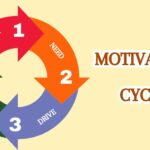
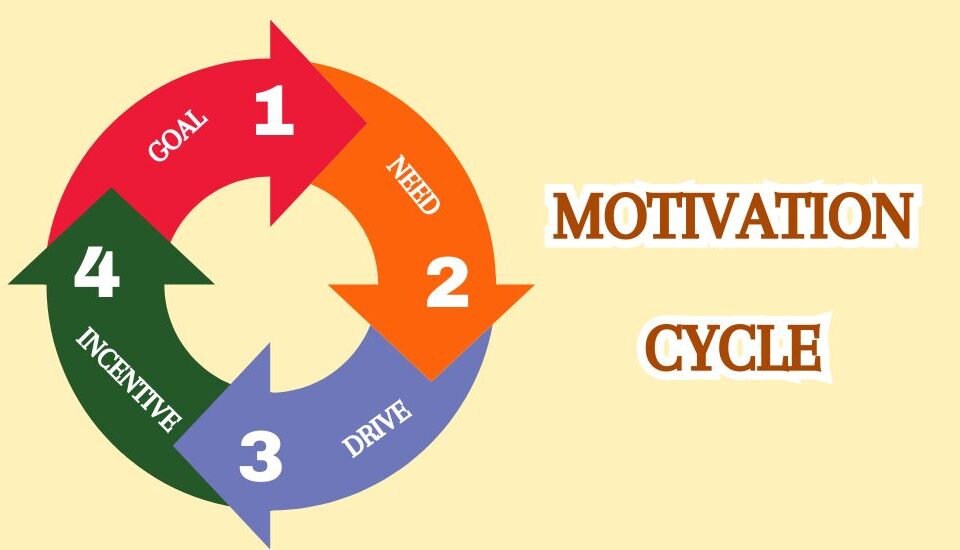
Motivate state is a process that starts with need and ends after a goal has been achieved, but it’s a never ending process. When one need is achieved another needs appears.
Motivation Process
Need
A need is lack or shortage of some necessities which cause a tension within an organism and can be of anything. Basic needs for life such as food, water, sleep, sex or whatever. Needs range from simple to complex. For any goal directed behavior, need is the first condition. Some may have simple psychological needs of clothes, food, shelter, sex whereas others may have secondarily needs of affiliation, power, achievement and others.
For instance need of food when you feel hungry or need of water when you feel thirsty or may be need of affiliation among friends.
Drive
When needs are activated we are energized or motivated towards fulfilling the needs. It energizes people to act. Drive is a consequence of its systematic process and also action oriented.
For instance if you are hungry you are driven or energized to cook, order or visit nearby restaurants to fulfill your needs. Moreover when you feel thirsty when sitting in your room, you go to the kitchen to drink water. The action you perform by going towards the kitchen is driving.
Incentive
Incentives are like reinforcement. It’s a condition that is perceived as satisfying the need. Without incentive motivation are not fulfilled. Incentive can be cash or kinds and depends on which forms of need it is. Incentives are followed by needs.
For example: Eating food when you are hungry or drinking water from bottles are incentives for you.
Goal
The goal is the satisfaction or pleasantness of fulfilling the needs. When goals are achieved the need is reduced. In the above example, consumption of food and reducing hunger is a goal. In fact it reduces the tension created by needs, goals can either be positive or negative. Once the goal has been completed, the organism is again ready for another goal-motivated behavior.
These four steps in human organisms keep rolling and rolling throughout life spans. It happens every morning, day, evening or at night. Every organism despite age, gender, races, ethnicity or whatever the background is motivates. We are guided by it every time. Some individuals may be highly motivated while others may be less. However, a cycle means that behavior goes on in a sequence. Oftentimes, a single motivated behavior can also fulfill multiple needs.
References
- Biyernes, S.(2015). “Motivation Cycle”, retrieved from http://itsmejulius.blogspot.com/2015/09/motivation-cycle.html
- Praveen Shrestha, “Motivational Cycle,” in Psychestudy, November 18, 2017, https://www.psychestudy.com/general/motivation-emotion/motivational-cycle.
- Smirti, (2018). “Motivation cycle”, retrieved from https://www.managementnote.com/motivation-cycle/
