



















Intellectual Disability
Table of Contents
Clinical Picture
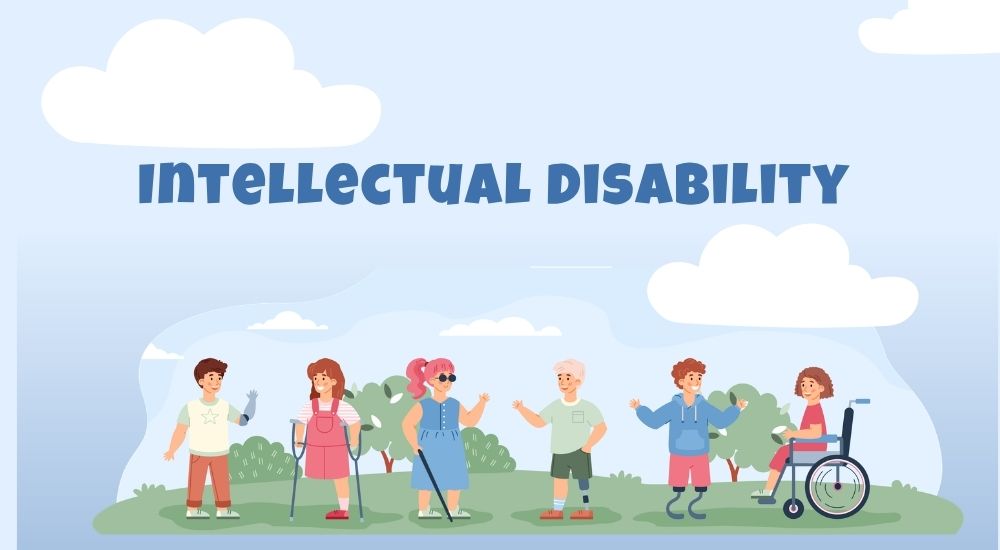
Intellectual Disability (ID) (mental retardation) refers to a particular state of functioning that begins prior to age 18, characterized by significant limitations in both intellectual functioning and adaptive behaviour (AAMR, 2002). Intellectual disability is a disability characterized by below average intellectual functioning and adaptive functioning (Toth & King, 2010). DSM-5 identifies difficulties in three domains: conceptual (reading, writing), social (social judgment, interpersonal communication skills) and practical (self management, personal care) (APA, 2013). Children may have intellectual disability by birth or it may originate before age of 18.
Intellectual disability was formerly known as mental retardation which was renamed because of the stigmatizing label with universally negative connotation. The term intellectual disability is increasingly used in its place, but has not been adopted universally. Intellectual Disability is a disability of children which affects the way they learn, and children may find it difficult to adapt to the new or unfamiliar situation.
Children with Intellectual Disability have significant difficulties in language and literacy; money, time, and number concepts; and self-direction (conceptual), setback in interpersonal skills, social responsibility, self-esteem, social problem solving, and the ability to follow rules/obey laws and to avoid being victimized (social) and problem in activities of personal care, occupational skills, healthcare, travel/transportation, schedules/routines, safety, use of money, use of the telephone (practical).
DSM-5 have identified intellectual disability is considered to be approximately two standard deviations or more below the population, which equals an IQ score of about 70 or below.
Based on severity and IQ score, Intellectual disability has been classified into four different types.
| Mild to Moderate | Severe | Profound |
| Educated and trainable | Trainable | Dependable |
| IQ between 69-49(69-50) Mild(49-36) Moderate | IQ between 35-20 | IQ less than 20 |
| Slower in all areas of conceptual development and social and daily living skills. These individuals can learn practical life skillsIndividuals with moderate ID can take care of themselves, travel to familiar places in their community, and learn basic skills related to safety and health. | Through extensive training children may be able to learn necessary life skills But limit to abnormal development Need constant assistance | Individuals cannot live independently, require close supervision and help with self-care activities. They have very limited ability to communicate Also have physical disabilities |
Diagnostic Criteria (DSM 5)
- Deficits in intellectual functions, such as reasoning, problem solving, planning, abstract thinking, judgment, academic learning, and learning from experience, confirmed by both clinical assessment and individualized, standardized intelligence testing.
- Deficits in adaptive functioning that result in failure to meet developmental and socio cultural standards for personal independence and social responsibility. Without ongoing support, the adaptive deficits limit functioning in one or more activities of daily life, such as communication, social participation, and independent living, across multiple environments, such as home, school, work, and community.
- Onset of intellectual and adaptive deficits during the developmental period.
Epidemiology
90 percent of intellectual disabilities are under categories of mild Intellectual Disability (Cooper & Smiley, 2012). Prevalence rate of ID across the world is estimated to be between 1 to 3 percent (Harris, 2006). Prevalence rate may be higher than it’s believed as many children in underdeveloped countries may go undiagnosed. Prevalence rate is higher in males (adult, child and adolescent). Among adults, the female-to-male ratio varies between 0.7:1 and 0.9:1, while in children and adolescents it ranges between 0.4:1 and 1:1 Prevalence in urban areas was lower (0.4%) than in rural areas (1.02%) (Kwok et al, 2011). Average life expectancy of profound intellectual disabilities is 30 years.
Etiology
There are literally hundreds of known causes of intellectual disability (Barlow, 2015). There is also strong evidence for prenatal or biological (before birth), neonatal (during birth) and postnatal period (after birth) of pregnant women.
Prenatal or biological
Around 60 % of Intellectual Disability cases have genetic influences, which make it the most common cause of severe MR (40). Two most common genetically transmitted forms of MR are Down’s syndrome (chromosomal disorder) and Fragile X syndrome (monogenic disorder). Change in numbers of chromosome numbers or chromosomal aberration are responsible for MR in approximately 28% of individuals (Curry et.al 2010).
As per, Down syndrome 21st set of chromosomes is a triplet rather than a pair which often result in moderate level of MR.43 similarly trisomy of chromosome number 18 (Edward Syndrome) and 13 (Patau Syndrome) can have severe forms of MR in children. However there is a high possibility that children may die in the first few weeks of their life if they have Edward or Patau Syndrome.
Another most common chromosomal disorder related to Intellectual Disability is Fragile X syndrome, as the name suggests this disorder is caused by an abnormality on the X chromosome. 5.1% of the MR patients are affected with fragile X syndrome (Moeschler & Shevell, 2006). Lack of nourishment, exposure to the radiation, use of substance uses during pregnancy can also cause ID.
Neonatal
Women along with children are prone to several diseases during and after pregnancy any misjudgment about their health may result in ID. Difficult complications of pregnancy, prolonged to biological disease (heart, kidney, diabetes, Jaundice) can also trigger ID. Prematurity and underweight of a new born baby can also result in MR. Infection to rubella, exposure to various drugs (e.g. Thalidomide, valproic aciod), exposure to radiation are the risk factors for having ID. Deficiencies of iodine in mothers during pregnancy restrict the growth of the brain in the fetus (Gaitan & Dunn, 1992).
Infants in the postnatal stage are in a critical period of lifespan development. Health crises such as Japanese encephalitis, meningitis, tuberculosis, consumption of lead, malnutrition may result in ID. If infant is exposure to mercury, if the infectious diseases such as meningitis, whooping cough, and measles are not treated it may result MR (Daily & Ardinger & Holmes, 2000)
Treatment
The treatment of mental retardation is predominantly nonmedical. Mental health clinicians; psychiatric, psychologist and others should integrate in the development of various treatment interventions.
Individuals with IDs benefit from group, individual and family psychotherapy, whose target is to insure quality of life. Disruptive behaviors should not merely be suppressed (by punishment), but they should be replaced with constructive, adaptive behaviors and skills. Patients should learn to understand their own disability, focus on strengths, and develop a positive self-image (King et.al, 1999)
Family therapy is another important factor which could help parents to acknowledge the understanding of ID and their children. Through this therapy they are trained to take care of their children. This therapy would help parents in advising in management and finding the resources (King et.al, 1999).
A Special educational program for children with ID such as vocational training, communicational and skill training would benefit children and adolescents to perform daily required tasks. Skill training will develop skills for self care (eating, washing, dressing and bladder control), communication training will help them to develop basic forms of communication such as greetings and vocational training will teach them the basics of alphabets, sums and others.
