


























Problem Solving
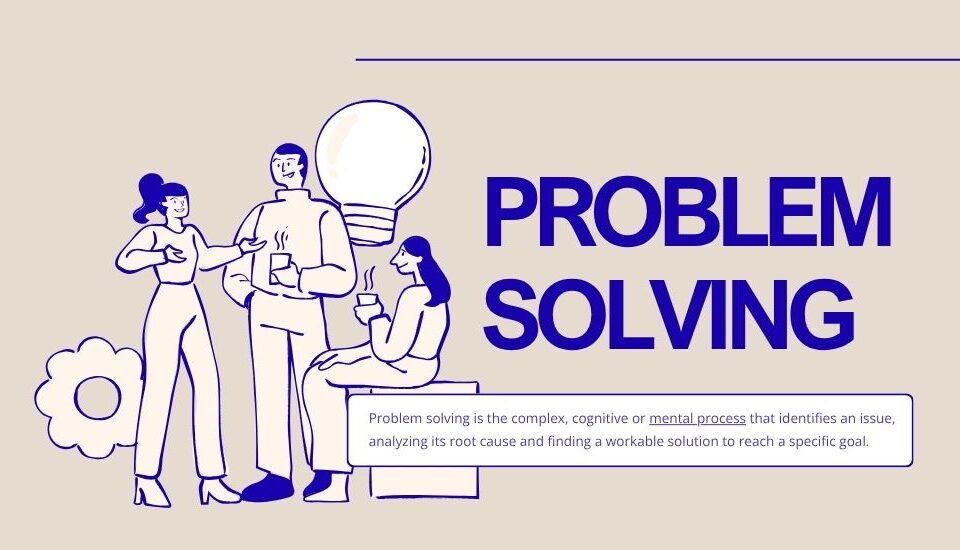
Problem solving is the complex, cognitive or mental process. It involves identifying an issue, analyzing its root cause and finding a workable solution to reach a specific goal. Problems are a natural part of personal life. We do this every day at education, business and professional activities. The ability to solve problems effectively helps individuals overcome challenges and achieve their goals.
Problem solving is not simply searching for a quick answer. It involves critical thinking, creativity, logistics, decision-making and evaluation. A person first needs to understand what the actual problem is, collect relevant information, analyze different factors and consider alternative solutions. After selecting a suitable solution the person implements it and evaluates whether it has successfully solved the problem.
Table of Contents
Problem solving means finding a way to reach your goal when something is blocking you. Every problem has 3 simple parts: a Goal, a Blocker, and a Solution.
Lets consider an example, a shopkeeper must deliver 50 orders by 8 PM, but that specific day delivery boy was absent. Now the goal for the shopkeeper is to deliver all the orders that he received by time. Now the problem can be solved by shopkeep delivering the goods by himself or hiring a bike rider for a day.
How We Solve a Problem
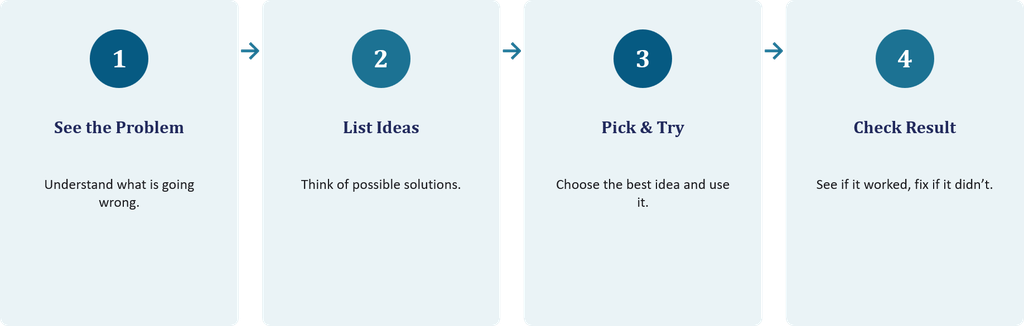
Step 1: See the problem
The first step in solving a problem is to see, define or identify the problem. Here the individual must clearly recognizes and defines what is the actual problem they are facing? A well defined problem is necessary as it makes it easy to find an appropriate solution. Thus, a specific and clear statement of what is wrong without mixing in opinions must be done. For example, if you are having a fatigue for last 3 days, you are shivering due to cold and had loss the apetite. Here you identify that you are having a fever.
Step 2: List Ideas
Now once the problem is identified, next step for problem solving is to brainstrom the possible soltions. The individual must list out the possible ideas. He or she must generates alternative solutions. One should list out the possible solutions of their problem instead of immediately choosing the first ideas. Creativity and critical thinking are very useful at this stage.For example, once you identify the that you are having a high fever, you attempt to overcome from it, you probably make list of solution to overcome it.
Step 3: Pick & Try
Once the possible alternative solutions are listed, the individuals choose the possible solution based on their advantages, disadvantages, cost, time, risks and expected results. They choose the solution that is most practical, effective and suitable for the situation which helps to problem solving.Now once the solutions is picked upon available resources, time and possible negative outcomes, put that chosen solution into real life. For example, when you are having fever and listed out multiple ideas to overcome it, you may choose one from many and have a paracetamol.
Step 4: Check Result
After picking the avaialble and possible solution to the probelm, individual should check whether or not the problem has been solved successfully. If the desired result is not achieved, they should be modify with the alternative solution. If the desried result is achieved problem solving process is completed. For example if the paracetamol have lower your fever or have it make you feel ok? if you have meet desired outcome you may go to work next day if not then you may visit the doctor next to your door.
Three Ways to Solve a Problem

Trial and Error
Trail and Error is one of the very useful and frequently used problem solving methods by the general population. It generally mean that we try one idea, if it fails to solve the problem then we try another solution. We keep going until some ideas help to solve the problems. This method is very good if the weight of the problem is small or simple.
For example, a restaurant owner tries three different strategies to bring in more customers. For the first week he mannequins the display. That week he reported very few customers. Next week he added a sale banner on it, then they reported more customers. Third week he added live music which saw more customers, and the owner kept this solution.
Algorithm
Algorithm refers to the fixed set of steps. Follow them in order and you always get the right answer. This method of problem solving is generally very slow, but never wrong if followed correctly. It is very best when there is only one correct answer. This type of method is used in mathematics such as for bills, formulas, and daily business rules.
For example Working out GST on a bill of ₹1,000 at 18%. Step 1 — Take the bill amount: ₹1,000. Step 2 — Multiply by 18%: ₹180 and Step 3 — Add it to the bill: ₹1,180 (always correct)
Heuristics
Heuristics are simple, pratical rules of thumb, mental shortcut or stratehies that people use to solve a problem and make decision quickly. It A quick guess based on past experience. It is very fast to use, but can sometimes be wrong. It is usually very applicavle if the time is very limited as it saves time, no need to check everything. It is also very useful for useful for quick, everyday business decisions. Howevery it can go wrong since it’s a guess, not a guarantee
For example a s shopkeeper decides what stock to reorder, he guessd that order that were old well last month will be out of stock for months and order same stock again. He saves the time of checking every single product. Usually right, but a new trend could still be missed.
Comparision

Factors Affecting
There are several factors that affect the problem solving mechanism in an indiviudals. Multiple cognitive, emotional and environmental factors affect proble solving ability, determining how quickly and effectively a person overcomes a challenges.

